

Can Invisalign Fix an Overbite? What You Need to Know Before Treatment
On this page
If you’re researching orthodontic treatment options, you’ve likely asked yourself: Can Invisalign fix overbite issues effectively? Overbites are one of the most common bite problems treated by orthodontists, and with the growing popularity of clear aligners, many patients want to know whether Invisalign is a reliable solution.
In this in-depth guide, we’ll explain what an overbite is, how Invisalign works, when it’s an effective treatment option, and what you should consider before starting care with Carvalho & Roth Orthodontics. By the end, you’ll have a clear understanding of whether Invisalign may be right for correcting your overbite.
What Is an Overbite?
An overbite occurs when the upper front teeth overlap the lower front teeth vertically. A slight overlap is normal and even healthy. However, when the overlap becomes excessive, it can lead to both functional and aesthetic concerns.
Common problems caused by an untreated overbite include:
- Excessive wear on the lower teeth
- Jaw pain or temporomandibular joint (TMJ) discomfort
- Difficulty biting or chewing
- Speech issues
- Increased risk of gum disease and tooth damage
Overbites can be caused by genetics, jaw growth differences, or childhood habits such as thumb sucking, prolonged pacifier use, or tongue thrusting. Understanding the cause of your overbite is an important step in determining the most effective treatment.
How Invisalign Works
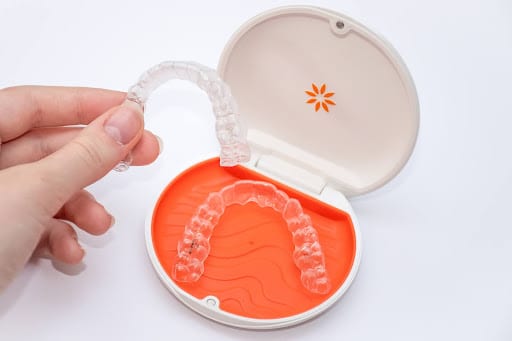
Invisalign is a modern orthodontic treatment that uses a series of clear, removable aligners to gradually move teeth into proper alignment. Each aligner is custom-designed using advanced digital scans and treatment-planning software.
Here’s how the Invisalign process typically works:
- You wear each set of aligners as much as possible during the day and night
- Aligners are changed on schedule
- Gentle, controlled pressure moves teeth incrementally
- Progress is monitored by your orthodontist through regular checkups
Because Invisalign aligners are removable and nearly invisible, they are especially popular among teens and adults who want a discreet alternative to traditional braces.
Can Invisalign Fix Overbite Problems?
The short answer is yes. Invisalign can fix many overbites, particularly mild to moderate cases. So, if you’re wondering can Invisalign fix overbite concerns, the answer is often encouraging.
Invisalign is most effective when the overbite is primarily dental in nature, meaning the issue lies in the position of the teeth rather than the structure of the jaw. Using attachments, precision cuts, and carefully planned tooth movements, Invisalign can successfully reduce overbite depth and improve bite alignment.
Factors That Determine Success
Not every overbite case is the same. Invisalign’s effectiveness depends on several important factors:
Severity of the Overbite
- Mild to moderate overbites respond very well to Invisalign
- Severe overbites, especially those caused by jaw discrepancies, may require traditional braces or a combination of treatments
Patient Compliance
Invisalign only works if aligners are worn consistently. Skipping wear time can slow progress and reduce effectiveness.
Benefits of Using Invisalign for Overbite Correction
Invisalign offers several advantages when used to treat overbites:
Discreet Appearance
Clear aligners are virtually invisible, making them ideal for patients who want a subtle orthodontic solution.
Improved Comfort
Without brackets or wires, Invisalign generally causes less irritation to the cheeks and gums.
Removable Convenience
You can remove aligners to eat, brush, and floss, which helps maintain better oral hygiene (opens in a new tab) throughout treatment.
No Food Restrictions
Unlike braces, Invisalign allows you to enjoy your favorite foods without worrying about damaging wires or brackets.
Digitally Planned Results
Your orthodontist can show you a digital preview of how your smile and bite will improve over time.
When Invisalign May Not Be the Best Option
While Invisalign is highly effective, it isn’t the right solution for every patient.
Invisalign may not be recommended if you have:
- A severe skeletal overbite caused by jaw structure
- Significant jaw misalignment requiring orthopedic correction
- Complex bite issues that need more precise mechanical control
In these cases, traditional braces or a combination of orthodontic and surgical treatment may provide better long-term results. A consultation with Carvalho & Roth Orthodontics will help determine the most appropriate treatment plan for your needs.
What to Expect During Invisalign Treatment
If you move forward with Invisalign, your treatment journey will generally include the following steps:
Initial Consultation
Your orthodontist evaluates your bite, takes digital scans, and determines whether Invisalign is suitable for your overbite.
Customized Treatment Plan
A personalized plan outlines each stage of tooth movement and estimates treatment length.
Wearing Your Aligners
Aligners are worn daily and changed on schedule to maintain consistent progress.
Progress Appointments
Periodic checkups ensure your teeth are moving as planned.
Refinements and Retainers
Additional aligners may be used for fine-tuning, followed by retainers to maintain your results.
Treatment time varies, depending on the complexity of your overbite and your compliance.
Why Choose Carvalho & Roth Orthodontics?
Carvalho & Roth Orthodontics provides personalized orthodontic care using evidence-based treatment methods. Their team focuses on creating healthy, functional, and confident smiles.
Patients benefit from:
- Customized Invisalign treatment plans
- Modern digital imaging and planning tools
- Patient-focused care for teens and adults
FAQs: Invisalign and Overbite Treatment
Can Invisalign fix overbite in adults?
Yes. Invisalign is highly effective for adults with mild to moderate overbites and is a popular choice due to its discreet appearance.
How long does Invisalign take to fix an overbite?
Treatment time varies, depending on severity and patient compliance.
Is Invisalign painful when correcting an overbite?
Some pressure or discomfort is normal when switching aligners, but it is usually mild and temporary.
Can Invisalign change jaw position?
Invisalign primarily moves teeth, not jaw bones. Significant jaw corrections typically require other orthodontic or surgical approaches.
Will my overbite return after Invisalign?
Wearing retainers as directed is essential to maintain results and prevent relapse.
How do I know if Invisalign is right for my overbite?
A professional evaluation at Carvalho & Roth Orthodontics is the best way to determine candidacy.
Schedule an Invisalign Consultation to Fix Your Overbite Today
So, can Invisalign fix overbite concerns? For many patients, the answer is yes. Invisalign offers an effective, comfortable, and discreet way to correct mild to moderate overbites while improving both function and appearance.
The key is choosing the right provider and following your treatment plan closely. If you’re considering Invisalign for overbite correction, schedule a consultation with Carvalho & Roth Orthodontics to explore your options and take the first step toward a healthier, more confident smile.
Our offices
Marlborough Orthodontic Office
Phone (508) 485-8788 call or text
Northborough Orthodontic Office
Phone (508) 393-5400
Newton Centre Orthodontic Office
Phone (617) 332-2434
Phone (508) 485-8788 call or text
Request a consultation
Call or text us and tell us which office and who the visit is for.